
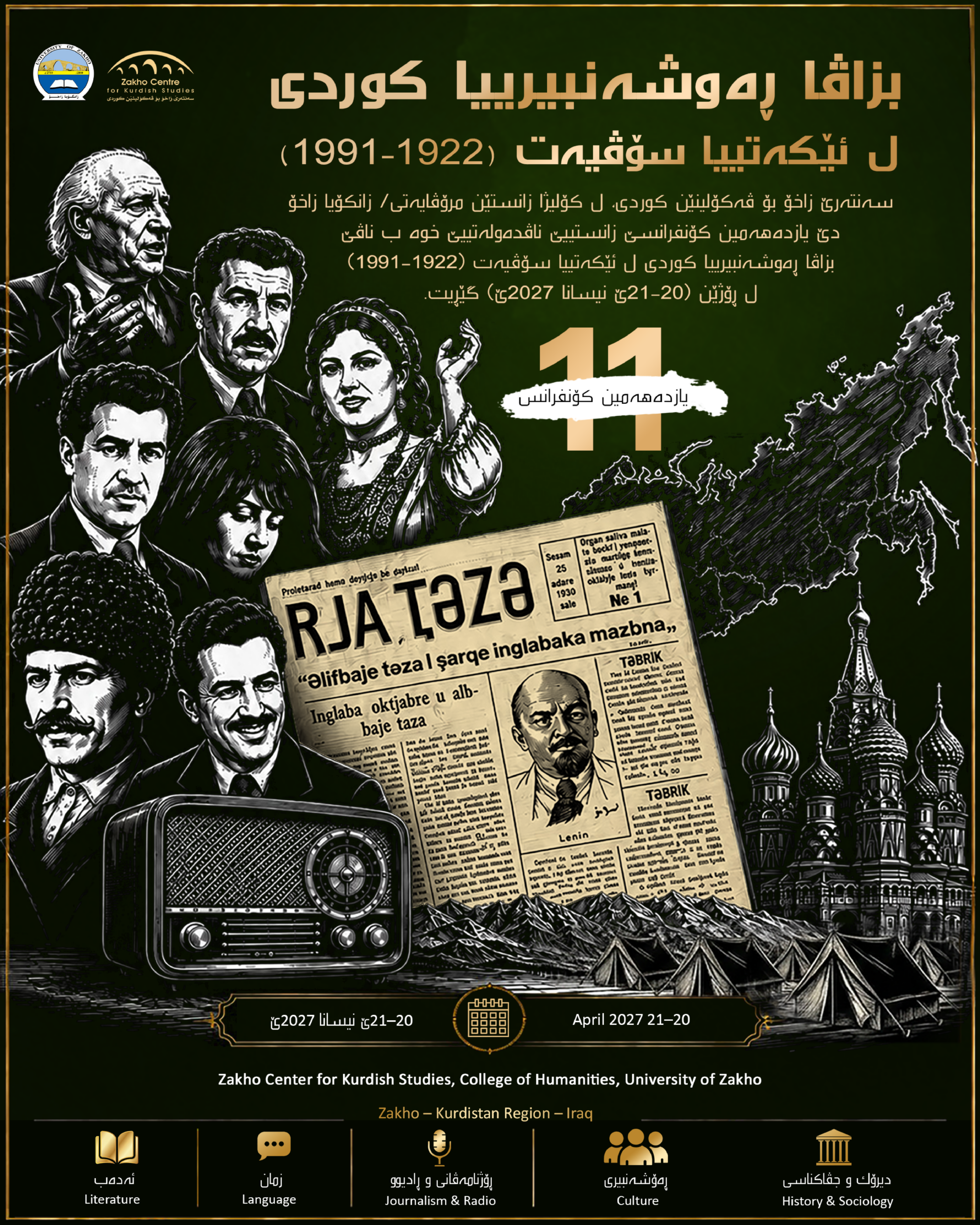
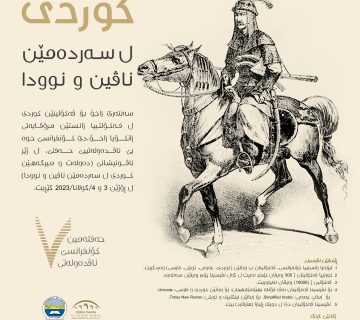
سەنتەرێ زاخۆ بۆ ڤەکۆلینێن کوردی، ل کۆلیژا زانستێن مرۆڤایەتی/ زانکۆیا زاخۆ دێ یازدەهەمین کۆنفرانسێ زانستییێ ناڤدەولەتییێ خوە ب ناڤێ “بزاڤا ڕەوشەنبیرییا کوردى ل ئێکەتییا سۆڤییەت (1922-1991)” ل ڕۆژێن (20-21ێ نيسانا 2027ێ) گێڕیت.
1.دهرازينك : وهلاتێ كوردان ژلایێ جوگرافیڤه ژلایێ باكوورێ ڕۆژههلاتڤه بهرهڤ سنوورێن مللهتێ ئهرمهن و گورج و ڕوووسڤه درێژ دبیت، ب ئهڤی ڕهنگی كورد و گهلێن سوڤییهتی دبنه دوو ههڤسنوور و جيران، ههروهسا كورد- ژبهر چهندین ئهگهرێن سیاسی، جڤاكین، ئابوورى و دیرۆكی- ل پتریا جوگرافیایا ئێكهتیيا سۆڤییهتا بهرێ بهلاڤ بووینه، ههر ژ ئهرمینیا وجورجیا ههتا كازاخستان وتوركمهنستان وتاجیكستانێ.لێ ژلایێ دیرۆكیڤه پهیوهندیيێن كورد و ئهڤان گهلێن ئێكهتیيا سۆڤییهتا، گهلهك كهڤنن، ئهڤ پهیوهندییه ل سهدهیێن ناڤڕاستدا پهیدابوون، بهلێ ل سهردهمێ نوودا ل گهل پهیدابوونا دهولهتا ڕووسیا وبهرفرههبوونا ئهوێ بهرهڤ دهڤهرا قهرهباغ و قهفقاس پهیوهندیێن د ناڤبهرا ههردوو ئاليياندا گهلهك بهرفرههتر بوون و ئێدی كوردستان بوو پارچهیهكا گرنگ د ناڤ ستراتیژيیا قهیسهرێن ڕووسدا. ژلایهكێ ل سالا 1922 (ئێكهتيیا كۆمارێن سوشیالیستێن سۆڤییهتی- USSR) هاتهدامهزراندن، ههرچهنده ئهڤێ دهولهتێ د ڕوالهتدا پرسێن (نهتهوه) و (دهولهت)ـان پشتگوهـ دهاڤێت، لێ گرنگییهكا مهزن ب (گهل)ـێن جیهانێ ددا بزاڤ دكر تیورێن خوه یێن سیاسی، جڤاكی و ستراتیژى د ناڤ ئهواندا بهلاڤ بكهت. و د ئهڤی چارچووڤیدا گرنگی ڕهوشهنبیری و دابونهریتێن ئهوان گهلـان ددا، ههروهسا زهمینهیهكا بهرفرههـ بۆ گرنگیدانا ئهوان گهلان ب كهلتوور و ڕهوشهنبیريیا خوه ئاماده كر.
2.پێناسەیا گشتی : ئێکەم بزاڤا ڕەوشەنبیريیا کوردى یا بهێز کو پشتى شەڕێ جیهانيیێ ئێکێ سهرهەلداى و ههتا دووماهيیا سالێن هەشتێيان ژ چەرخێ بیستێ بەردەوام بووى، ئهو بزاڤ بۆ ئەوا د ناڤ جڤاکێن کوردێن سۆڤییەتدا هەلبووى. یا دیارە ل دەمێ دامەزراندنا ئێکەتيیا سۆڤییەت ل سالا ١٩٢٢ێ کۆمەکا جڤاکێن کوردى ل ئێکەتيیا سۆڤییەت دژیان نە خاسمە ل ئەرمینیا و جۆرجیا و هندەک دەڤەرێن دييێن قەفقاسیا، ئەڤان جڤاکان بزاڤەکا ڕەوشەبیرىیا کوردى بەرپاکر، و ئەگەر ب هویرى بهرێ خوه بدهينه ئەڤێ بزاڤێ دێ سێ تەوەراندا بینین، یا ئێکێ ب ڕێکا ڕۆژنامهيا ڕێيا تازە کو دهێتەهژمارتن ب تەمەنترین ڕۆژنامهيا کوردى، یا دوويێ ب ڕێکا ڕادیۆییا یێریڤانێ کو ژ ئێکەم ڕادیۆيێن کوردى بۆ ل سەر ئاستێ جیهانى، یا سێیێ کو ژ هەر دويێن دى کێمتر نەبوو ئەو ژى بزاڤا نڤیسینا ئەدەب، زمان و دیرۆکا کوردى بوو ب تايبهتى ئەو ڕۆمانێن کوردێن سۆڤییەت بهلاڤكرين و کاریگەرى ل هەمى جڤاکێ کوردى ل ڕۆژهەلاتا ناڤەڕاست كرى. ب ئهڤى ڕهنگى دویڤچوون و ڤەکۆلین ل ئەڤێ بزاڤا ڕەوشەنبیریيا كوردان ل ئێکەتيیا سۆڤییەت كو د ڕهوشهكا گهلهك ئالۆز و ب زهحمهتدا دهربازدبوو، كارهكێ فهره و سهردهمهكى هڤييا تاکێ کورد ل هەر جهەکى ب تايبهتى ل ڕۆژهەلاتا ناڤەڕاست بوو.
3. ئارمانجێن کونفرانسى : باسكرنا قۆناغێن هەرە گرنگێن وەرارا ڕەوشەنبیرییا تاکێ کورد ل ئێکەتییا سۆڤییەتێ ژ گۆشەنیگایێن جۆراوجۆرڤە:
- گرنگیدان ب لایەنێ زمانییێ بەرهەمان و بلندکرنا ئاستێ هشیارییێ ل ئێکەتییا سۆڤییەت.
- نرخاندن و نيشاندانا ڕۆلێ بهرههمێن زمانييێن ئهڤێ سهردهمى، ب تايبهتى بزاڤا نڤيسينا ڕێزمان و فهرههنگێن كوردى د پاراستنا و بهلاڤكرنا زمانێ كورديدا.
- گرنگیدان ب چارچووڤێ فۆلکلۆرا کوردی ل ئێکەتییا سۆڤییەت و ل بەرچاڤوەرگرتنا ڕۆلێ فۆلکلۆرا کوردی ل ئەوی سەردەمی و لێکڤەگۆهاستنا زانیارییان ل گەل نەتەوەیێن دیتر.
- پاراستن و ڤەگۆهاستنا بهایێن ڕەسەنێن نەتەوەیی و دیرۆکی، د بەرهەمێن ئەدەبی و زانستییێن ڕەوشەنبیران ل ئێکەتییا سۆڤییەت.
- پۆلینەکا تایبەت بۆ ئەدەبیاتا ئێکەتییا سۆڤییەت، ژ گشت لایەن و قۆناغێن ئەدەبیڤە.
- ب هێزکرنا ناسنامەیا نەتەوەییا کوردان و زیندیکرنا بهایێن دابونەریت و ڕێوڕەسمێن ئایینييێن کوردان ل ئێکەتییا سۆڤییەت.
- ڕاوەستان ل سەر دیرۆکا کوردان ل ئێکەتییا سۆڤییەت.
- ڤەدیتنا بەربەست و ڕاکرنا ئەوان بەربەستان د ب هەڤگەهاندنا کوردێن چارپارچەیێن کوردستانێ ل گەل کوردێن ل ئێکەتییا سۆڤییەت و بڕیاردان ل سەر ئەوان ڕێکاران و
- ڕاوەستان ل سەر دەزگەهێن ڕاگەهاند ل ئێکەتییا سۆڤییەت، وەکى ڕۆژنامە و ڕادیۆ.
- دانانا پەرتووکەکا تایبەت ب ئەدەبیات و دیرۆکا کوردان ل ئێکەتییا سۆڤییەت.
- دروستکرنا پرەکا ب هێزا پەیوەندیێین زانستییێن زانکۆیێن چار پارچەیێن کوردستانێ، ل گەل کوردێن ل ئێکەتییا سۆڤییەتا بەرێ. (وەکى: جڤاکناسی، ئەدەب، زمان، دیرۆک، ڕاگەهاندن، …)
- گرنگیدان ب پارچهیهكا ژبیركری ژ كوردستانێ (كوردستانا سوڤییهتی).
- دیاركرنا ڕۆلێ گهلێن سوڤییهتی د پاراستن و بهلاڤكرنا ڕهوشهنبیريیا كوردیدا.
- – زانینا نهخشهیێ بهلاڤبوونا كوردان د ناڤ كۆمارێن ئێكهتیيا سۆڤییهتدا
- دیارکرنا جیاوازییا كولتورێ کوردان ل ئێکەتییا سۆڤییەت.
- ڕۆلێ وەرگێڕانێ د پێشخستن یان پاراستنا فۆلکلۆر، ئەدەبیات و دیرۆکا کوردان ل ئێکەتییا سۆڤییەت .
- خواندنەكا زانستی بۆ بەرهەمێن ئەدەبی و مێژووییێن کوردان ل ئێکەتییا سۆڤییەت، وەکى: دیوان، ڕۆمانێن ئەدەبی و دیرۆکی، ڕۆژنامە، ژیاننامە و … بۆ پتر هەستپێکرنا سەروبەرێ جڤاکی، سیاسی و ڕەوشەنبیرییا سەردەمێن جودايێن کوردان.
- ڤەکۆلین ل سەر گشت پشکێن فۆلکلۆرێ کوردی و دیاركرنا ڕێڕەوا وەرارا زمانی ل ئێکەتییا سۆڤییەت.
4.دیتن : دویڤچوون و ڤەدیتنا چەمکێ “ڕەوشەنبیرییا كوردی ل ئێکەتییا سۆڤییەت” ژ گۆشەنیگایێن ئەدەبی، دیرۆکی، زانستی، زمانی و ڕاگەهاندنی د ناڤبهرا سالێن (١٩٢٢-١٩٩١)ێ خواندنەکا نوویە بۆ تاکێ ئەوی سەردەمی و شڕۆڤەیا هزرا مارکسیسم – لینینیسمییە ل سەر گشت ئەوان بەرهەمان، کو سەرەڕای دویڤچوونا هویرا ئەوێ دەستهەلاتێ ب سەر هزرمەندان، شاکارێن ئەدەبی، هونەری وزانستی ژدایک بووینە. کۆنفرانس ب مەرەما دروستکرنا پێگەهەکێ گونجایی، یێ زانستی و ئەدەبی و کەلتووری، بزاڤا لێکتێگەهشتن و لێکگۆهارتنا زانیارییان د بياڤێ ڕەوشەنبیرییا كوردی ل ئێکەتییا سۆڤییەت و قۆناغێن دیرۆکییێن جودايێن ئەوێ دکەت.
5.تەوەر : ئەڤ کۆنفرانسە ل سەر چەند تهوهران کار دکەت:
تهوهرێ ڕهوشهنبیری
- گرنگیدان ب ئهدهبیات و زمانێ كوردی ل ئێكهتیيا سۆڤییهت
- ڕۆژنامهگهريیا كوردی ل ئێكهتيیا سۆڤییهت
- ڕادیۆیا کوردی ل ئێکەتییا سۆڤییەت
- كۆمهله و ڕێكخستنێن ئهدهبی و جڤاكیێن كوردی ل ئێكهتيیا سۆڤییهت
- ڕۆلێ زانایێن كورد د ڤهكۆلینێن (مرۆڤایهتی و زانستێن پهتیدا)
- كورد د ناڤ ڕهوشهنبیری و چاپهمهنیيا سۆڤییهتدا
تهوهرێ جڤاكى:
- كورد ل ئێكهتيیا سۆڤییهت (دابهشبوونا جوگرافی و تهخێن جڤاكی)
- دابونهریتێن جڤاكی و ڕێورهسمێن كهلتووری
- فولكلورێ و ئهدهبیاتێ زارهكی
تهوهرێ دیروكی:
- وێنهیێ كوردان د ناڤ بیردانكا گهلێن سۆڤییهتدا
- ڕۆلێ سازی و دهزگههێن فهرميیێن دهولهتێ د بهلگهكرن وبهلاڤكرنا ڕهوشهنبیرییا كوردیدا
- گرنگیا ئهرشیفخانهیێن سۆڤییهتێ د پێشخستنا ڕهوشهنبیريیا كوردیدا
- ساخكرنا دهستخهت و نڤیسێن كوردییێن كهڤن
كوردێن (كوردستانا مهزن) و ئێكهتیيا سۆڤییهتی
- ڕهڤهندا كوردی ل ئێكهتیيا سۆڤییهت
- ڕۆلێ پهنابهرێن كورد ل ئێكهتیيا سۆڤییهت
- گرنگیدانا كوردان ب ڕهوشهنبیریيا كوردی ل ئێكهتيیا سۆڤییهت
- شاندێن ئهكادیمييێن كوردان ل ئێكهتیيا سۆڤییهت.
6. ڕێنمایێن نڤیسینێ:
- لیژنەیا زانستییا کۆنفرانسی ڤەکۆلینان دێ ب زمانێن (کوردی، ئینگلیزی، فارسی، عەرەبی وتورکی) وەرگریت.
- کورتییا ڤەکۆلینێ ژ (500) پەیڤان پتر نەبیت و پەیڤێن سەرەکی ژ (5) پەیڤان کێمتر نەبن.
- پوخته ب زمانێ ڤهكۆلينێ بيت و ل سهر وۆردێ ههڤپێچ و ل دويڤ ڕێنمايان بهێتهبهرههڤكرن.
- ڤەکۆلین ژ (10000) پەیڤان نەبووریت.
- فۆنتێ (Times New Roman) بۆ نڤيسينا ڤهكۆلينان ب زمانێ كوردى، فارسى، عهرهبى، ئینگلیزى و توركى دهێتهبكارهينان.
- ڤەکۆلین ب شێوازێ (APA) بهێتهنڤیسين.
7. ژڤانێن گرنگ:
- ڕاگههاندن: 10ێ تیرمهها 2026ێ
- هنارتنا کورتییا ڤەکۆلینان هەتا: 25ێ تهباخا 2026ێ
- وەرگرتن یان ڕەدکرنا کورتییا ڤەکۆلینان: 10ێ ئهيلوولا 2026ێ
- هنارتنا ڤەکۆلینان ب شێوەیەکێ تەمام: 20ێ كانوونا ئیكێ 2026ێ
- هایدارکرن ب پەسەند یان ڕەدکرنا ڤەکۆلینێ: 10ێ كانوونا دوویێ 2027ێ
- گرێدانا کۆنفرانسی دێ ل ڕۆژێن (20-21ێ نيسانا 2027ێ)ێ بیت
The Zakho Center for Kurdish Studies, College of Humanities, University of Zakho, will hold its 11th International Scientific Conference, entitled: The Kurdish Cultural Movement in the Soviet Union (1922–1991) on 20–21 April 2027.
1. Introduction : Kurdistan, from a geographical perspective, extends in the northeast toward the borders of the Armenian, Georgian, and Russian nations. Consequently, the Kurds and the peoples of the Soviet Union became neighboring communities sharing common frontiers. Moreover, due to a range of political, social, economic, and historical factors, Kurdish communities became widely dispersed across the territory of the former Soviet Union, stretching from Armenia and Georgia to Kazakhstan, Turkmenistan, and Tajikistan. From a historical perspective, the relations between the Kurds and the peoples of the Soviet Union date back many centuries. These connections originated during the medieval period; however, they expanded significantly in the modern era with the emergence of the Russian state and its territorial expansion toward the regions of Karabakh and the Caucasus. As a result, relations between the two sides became increasingly extensive, and Kurdistan came to occupy an important place in the strategic considerations of the Russian Empire. With the establishment of the Union of Soviet Socialist Republics (USSR) in 1922, although the Soviet state ostensibly downplayed the concepts of “nation” and “state,” it attached considerable importance to the world’s peoples and sought to disseminate its political, social, and strategic doctrines among them. Within this framework, the Soviet Union placed significant emphasis on the intellectual life and cultural heritage of different peoples, while also creating a favorable environment that enabled these communities to preserve and develop their own cultural and intellectual traditions.
2.General Overview : The first major Kurdish intellectual movement, which emerged after the First World War and continued until the late 1980s, developed within the Kurdish communities of the Soviet Union. At the time of the establishment of the Union of Soviet Socialist Republics (USSR) in 1922, sizeable Kurdish communities were already living within Soviet territory, particularly in Armenia, Georgia, and other parts of the Caucasus. These communities laid the foundations for a vibrant Kurdish intellectual movement. A closer examination of this movement reveals three principal dimensions. The first was the publication of the newspaper Riya Teze (The New Path), widely recognized as the oldest Kurdish newspaper. The second was Yerevan Radio, one of the world’s earliest Kurdish-language radio broadcasts. The third, which was no less significant than the previous two, was the development of Kurdish literature, language, and historiography, particularly through the publication of novels by Soviet Kurdish writers that profoundly influenced Kurdish society throughout the Middle East. Accordingly, examining and studying the Kurdish intellectual movement in the Soviet Union—which evolved under highly complex and challenging circumstances—is both an important scholarly endeavor and the fulfillment of a long-standing aspiration shared by Kurds everywhere, especially those in the Middle East.
3.Conference Objectives : The conference aims to explore the most significant stages in the development of the Kurdish intellectual movement in the Soviet Union from various perspectives, including:
- Highlighting the linguistic contributions of Kurdish intellectuals and their role in raising cultural and national awareness within the Soviet Union.
- Evaluating and demonstrating the role of linguistic works of the period, particularly the compilation of Kurdish grammars and dictionaries, in preserving and promoting the Kurdish language.
- Emphasizing the framework of Kurdish folklore in the Soviet Union, examining its role during that period, and exploring the exchange of cultural knowledge with other nations.
- Preserving and promoting authentic national and historical values as reflected in the literary and scholarly works of Kurdish intellectuals in the Soviet Union.
- Dedicating a specialized focus to Soviet Kurdish literature from all literary perspectives and historical stages.
- Strengthening Kurdish national identity and revitalizing traditional values, customs, and religious practices among the Kurds of the Soviet Union.
- Examining the history of the Kurds in the Soviet Union.
- Identifying the obstacles that hindered communication between the Kurds of the four parts of Kurdistan and the Kurds of the Soviet Union, and proposing appropriate solutions to overcome these barriers.
- Examining the role of mass media institutions in the Soviet Union, particularly Kurdish newspapers and radio broadcasting.
- Encouraging the publication of specialized books on the literature and history of the Kurds in the Soviet Union.
- Establishing strong academic cooperation among universities across the four parts of Kurdistan and scholars of the former Soviet Union in fields such as sociology, literature, linguistics, history, media, and related disciplines.
- Drawing scholarly attention to a largely neglected part of Kurdistan, namely Soviet Kurdistan.
- Highlighting the role of the peoples of the Soviet Union in preserving and disseminating Kurdish intellectual and cultural heritage.
- Examining the geographical distribution of Kurdish communities across the republics of the Soviet Union.
- Identifying the distinctive characteristics of Kurdish culture in the Soviet Union.
- Examining the role of translation in the development and preservation of Kurdish folklore, literature, and history in the Soviet Union.
- Conducting scholarly analyses of Kurdish literary and historical works produced in the Soviet Union—including diwans, literary and historical novels, newspapers, biographies, and other publications—to gain a deeper understanding of the social, political, and intellectual conditions of different periods of Kurdish history.
- Conducting research on all branches of Kurdish folklore and identifying the patterns of linguistic development in the Soviet Union.
4.Vision : Exploring and examining the concept of “Kurdish Intellectual Life in the Soviet Union” from literary, historical, scholarly, linguistic, and media perspectives during the period 1922–1991 offers a new reading of the intellectual landscape of that era and an analysis of the influence of Marxist–Leninist ideology on its intellectual and cultural production. Despite the close supervision exercised by the Soviet authorities over intellectuals, remarkable literary, artistic, and scholarly achievements emerged during this period. The conference seeks to establish an appropriate academic, literary, and cultural platform for fostering dialogue and the exchange of knowledge on the Kurdish intellectual movement in the Soviet Union and the various historical stages through which it evolved.
5.Conference Themes : The conference will address the following thematic areas:
5.1. Intellectual and Cultural Studies
- Kurdish language and literature in the Soviet Union
- Kurdish journalism in the Soviet Union
- Kurdish radio broadcasting in the Soviet Union
- Kurdish literary and social associations and organizations in the Soviet Union
- The role of Kurdish scholars in the humanities and natural sciences
- The Kurds in the intellectual and publishing life of the Soviet Union
5.2. Social Studies
- The Kurds in the Soviet Union: geographical distribution and social structure
- Social traditions, customs, and cultural practices
- Kurdish folklore and oral literature
5.3. Historical Studies
- The image of the Kurds in the collective memory of the peoples of the Soviet Union
- The role of state institutions and official bodies in documenting and disseminating Kurdish intellectual and cultural heritage
- The importance of Soviet archives in advancing Kurdish intellectual and cultural studies
- Preservation and restoration of ancient Kurdish manuscripts and historical writings
5.4. The Kurds of Greater Kurdistan and the Soviet Union
- Kurdish migration to the Soviet Union
- The role of Kurdish refugees in the Soviet Union
- The contribution of the Kurds to the development of Kurdish intellectual life in the Soviet Union
- Kurdish academic delegations to the Soviet Union
6.Submission Guidelines
- The Scientific Committee of the conference welcomes research papers in Kurdish, English, Persian, Arabic, and Turkish.
- The abstract must not exceed 500 words and should include at least five (5) keywords.
- The abstract must be written in the same language as the paper, prepared in Microsoft Word, and formatted in accordance with the conference guidelines.
- The full paper must not exceed 10,000 words.
- Times New Roman shall be used as the font for papers written in Kurdish, Persian, Arabic, English, and Turkish.
- All submissions must be prepared in accordance with the APA (American Psychological Association) referencing and citation style.
7.Important Dates
- Conference Announcement: 10 July 2026
- Deadline for Abstract Submission: 25 August 2026
- Notification of Abstract Acceptance/Rejection: 10 September 2026
- Deadline for Full Paper Submission: 20 December 2026
- Notification of Full Paper Acceptance/Rejection: 10 January 2027
- Conference Dates: 20–21 April 2027
(+964 (0) 751 536 1550) | hum.isc2026@uoz.edu.krd
تێبینی: بۆ دانلۆدکرنا پرۆگرامێ کۆنفرانسی، زمانەکی هەلبژێرە و ل سەر کلیك بکە.
پرۆگرامێ کۆنفرانسی: زمانێ کوردی(ئارامی) | زمانێ عەرەبی | زمانێ ئینگلیزی | زمانێ kurdî-latînî
)
No comment